Jun 15, 2026
Scale X Soul: Why Balanced Brand Architecture Wins
How to combat the sea of look-alike brand slop with human-centered governance systems
As of 2026, the average US consumer is bombarded with 6,000 to 10,000 marketing messages a day, placing extraordinary demand on their limited attention span. The uptick represents a 30X increase in volume since the dawn of the digital marketing era in the late 1990s, a time when mass communication was already considered overwhelming.
Despite the exponential increase in commercial messaging, however, the reality is that the human mind can only process approximately 100 messages a day. The average consumer spends only 1.5 seconds engaging with brand content before deciding to swipe left or right. This means that for your marketing to succeed, your content must win that 1.5-second window to earn the right to pitch them, placing extra emphasis on original, resonant creative as a prerequisite for every piece of content deployed. Yet, the industry is flooding channels with a never-ending stream of look-alike creative offering no clear value, despite having unprecedented access to innovative tools for creating excellent ads.
Somewhere along the way, it seems the industry forgot we’re in the business of persuading people to buy on the other end of the screen. Instead, the focus is on optimizing algorithms with soulless, bland creative that leaves consumers overwhelmed and burned out on brands.
The shift in focus from connecting with consumers to chasing dashboards and growth hacks has reduced consumers to flat, lifeless data points. And a basic truth was lost in this process: real people make buying decisions, not a mathematical equation skewed to satisfy quarterly targets.
What's worse is that consumers are well aware of the exponential increase in volume and the decrease in content quality. Highlights of consumer surveys over the last year reveal these dire findings:
93% actively skip or block ads (Clutch)
81% tune out brand interruptions (Gartner)
74% abandoned purchases because they felt overwhelmed (Trendwatching)
70% unsubscribe from at least 3 email lists due to overwhelm (Optimove)
55% switch brands multiple times due to overwhelm (Optimove)
Case Study: Course-Correcting a Drowning System
Recently, I was challenged to solve many of these exact problems for an enterprise organization that racked up a catastrophic 28% Opt-Out Rate and drove their audiences to systemic marketing overwhelm while doing it. Their deployment strategy centered on meeting the needs of internal stakeholders rather than their customers. As a result, they bombarded 17,000 subscribers with 2.8 million generic, non-responsive emails in a single year. The approach not only decreased email efficacy and sales but also gave them a negative sender reputation that blocked 22% of their customers from receiving their emails. In short, by drowning their customers with ineffective e-slop, they lost almost 30% of their audience and were sinking the business.
To course-correct, I implemented a brand-centered email governance system and a decision framework to align outreach priorities, limiting deployment to a maximum of one email per day per customer. I modernized their tech stack to leverage hyper-personalized dynamic content and implemented expanded email preferences, offering customers control over their content volume and topics. And perhaps most importantly, I recentered their brand voice and messaging to address customer needs and drive value, showing respect for their intelligence and time to reestablish brand trust.
The results at the end of the fiscal year justified the changes: the decision framework reduced annual email volume by 49% and lowered opt-outs to an acceptable 0.09%, a 311X improvement. Meanwhile, the human-centered content generated a 45.1% (+27X) Open Rate and a 6.4% (+64X) Unique CTR. The improvements demonstrate that balancing scale with soul through a governed brand architecture system with human-centric content creates measurable results, even in extreme situations.
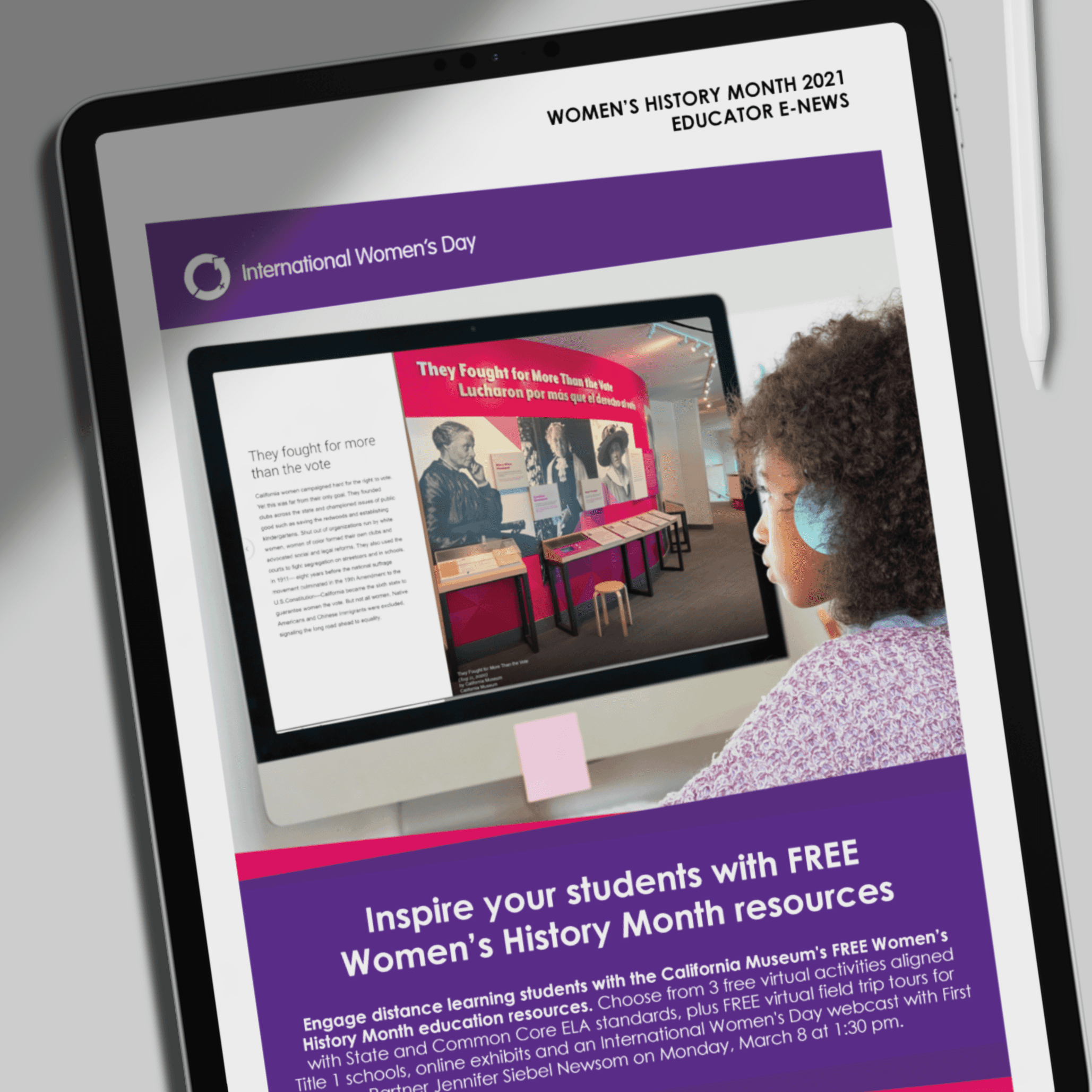

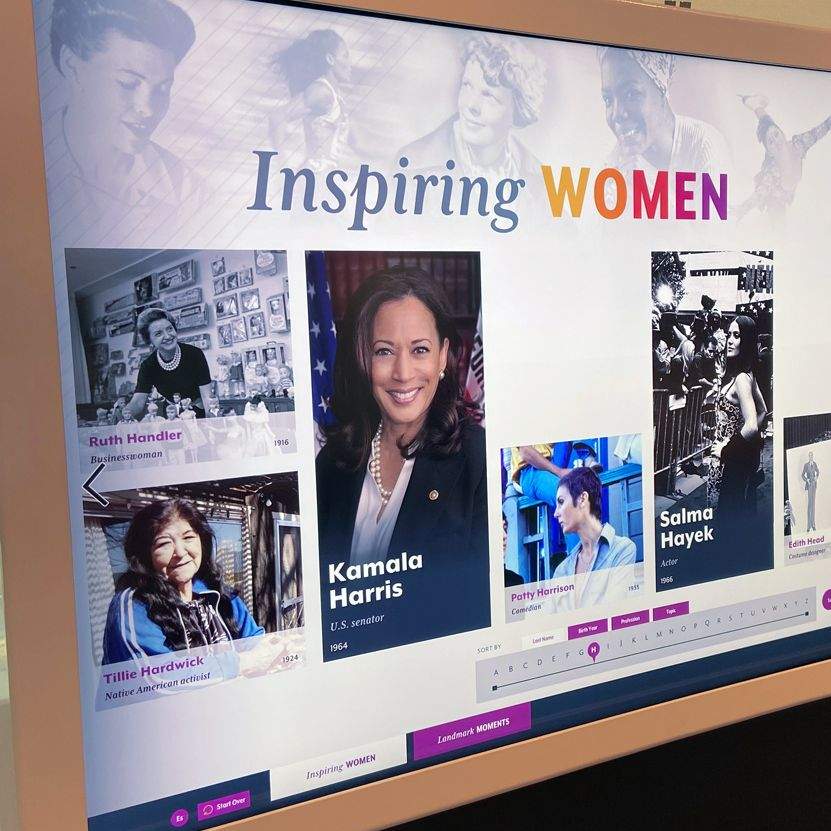
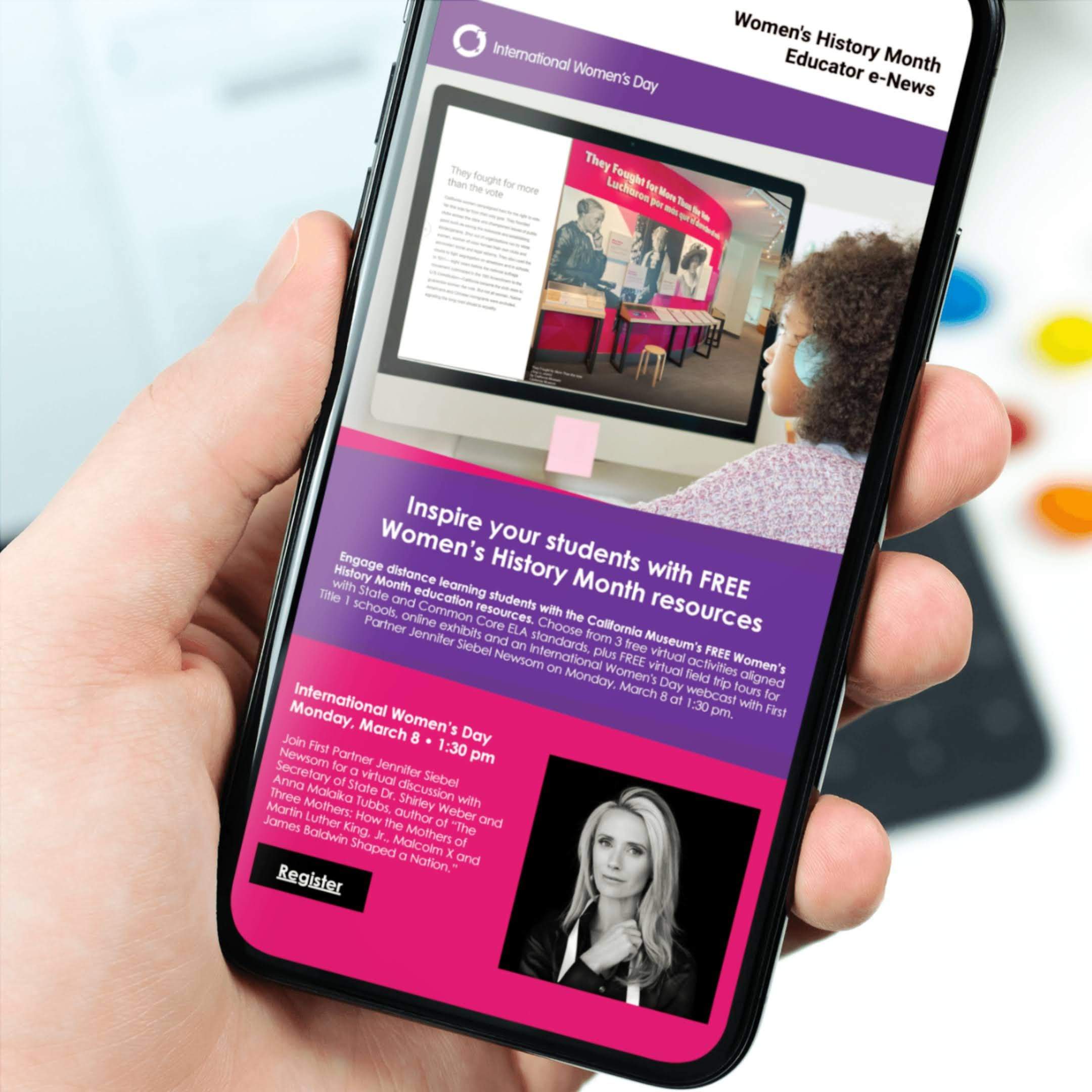
Brand architecture assets for Women's History Month at the California Museum, featuring (top left) a responsive email campaign, (top right) digital ads for a panel discussion with California Secretary of State Shirley Weber and author Malika Tubbs moderated by First Partner Jennifer Siebel Newsom, and (bottom left) an interactive microsite and (bottom right) mobile K-12 educator resources on microsite.
Balanced Brand Architecture for the Win
During my tenure leading brand marketing from 2010 to 2021 at the California Museum, I had an incredible opportunity to design and pressure-test brand frameworks at a systems level, unifying story, experience, and audience impact. This approach treats a brand not as an isolated marketing silo, but as a governed core system of the business that drives increased resonance, recognition, and ROI. Brand architecture and governance systems ensure consistent, cohesive brand integrity across customer experiences, enabling scale that drives long-term brand recognition, customer relationships, and ROI.
To counter this era of unprecedented technology-driven consumer fatigue and brand slop, I spent the last 24 months rebuilding my approach. I obtained advanced credentials across four distinct pillars to create a balanced approach to growth:
Scale (Systems & Structure)
Modern Intelligence: Leveraging AI and marketing technology to automate workflows, optimize for profitability, and bypass standard efficiency traps.
Structural Rigor: Designing enterprise-wide brand architectures and governance systems to protect high-value IP and align internal business planning.
Soul (Internal & External Human Alignment)
Aligned Market Leadership: Developing structured strategic brand plans and positioning skills to accelerate cross-functional alignment and market relevance.
Human-Centered Meaning: Grounding brand narratives in consumer analytical psychology to capture authentic human resonance.
My Scale X Soul framework officially formalizes the approach I took to consistently deliver up to 25% market growth, 800% more engagement, and 1400% ROI. It incorporates my best practices and reveals the consistent truth across my work on more than 150 brands: that scaling execution while governing high-quality, human-centered content wins every time.




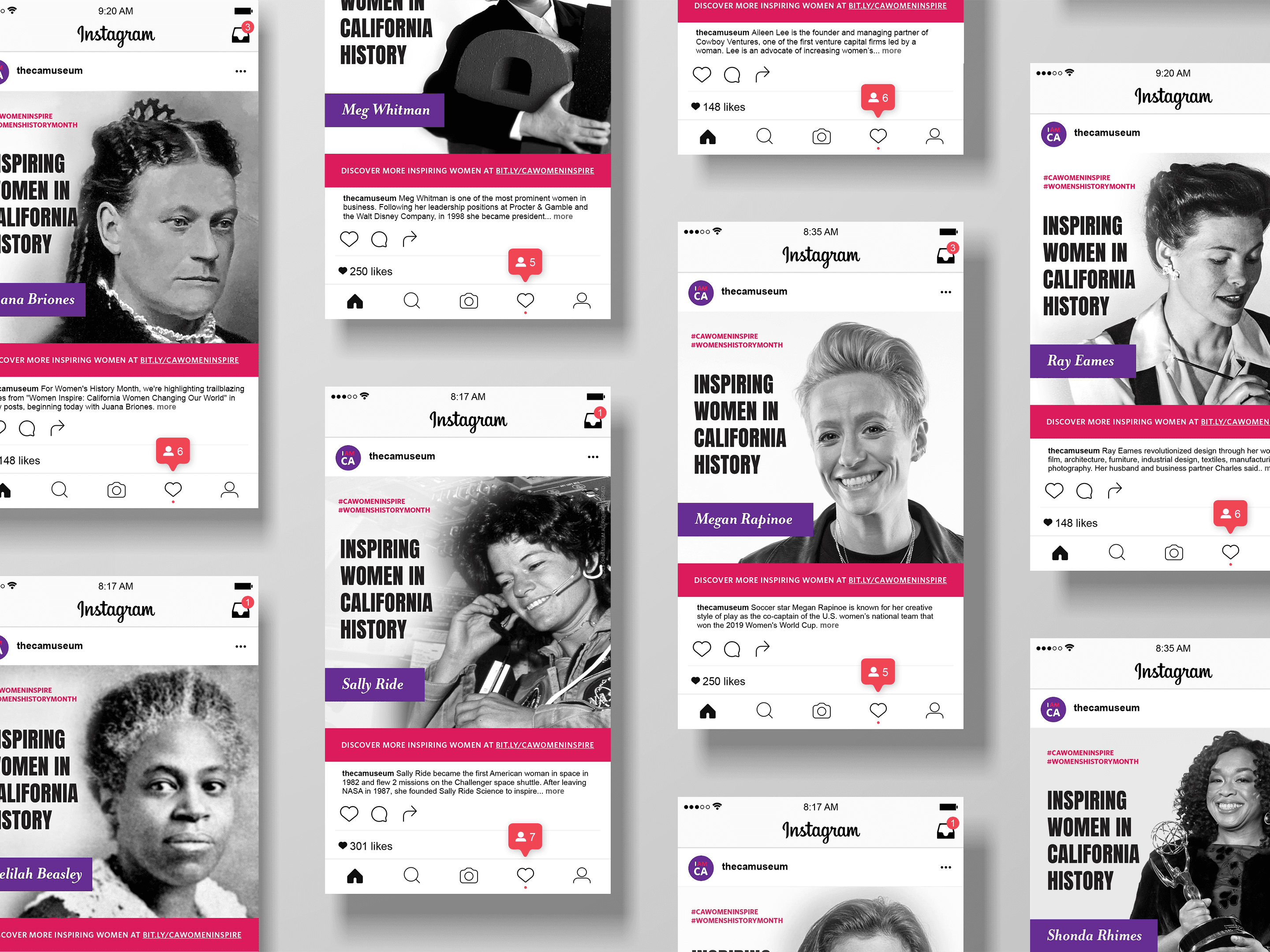
Brand assets for the California Museum's Women's History Month social media campaign, featuring 31 daily posts highlighting the stories of inspirational California women who broke barriers in their fields.
TLDR
Consumers are drowning in a sea of boring brand slop in 2026. Brand architecture systems that balance scale and soul are a proven methodology to break through marketing fatigue and drive consumer engagement while delivering measurable results and sustainable, long-term growth.