Dolores Huerta
OVERVIEW
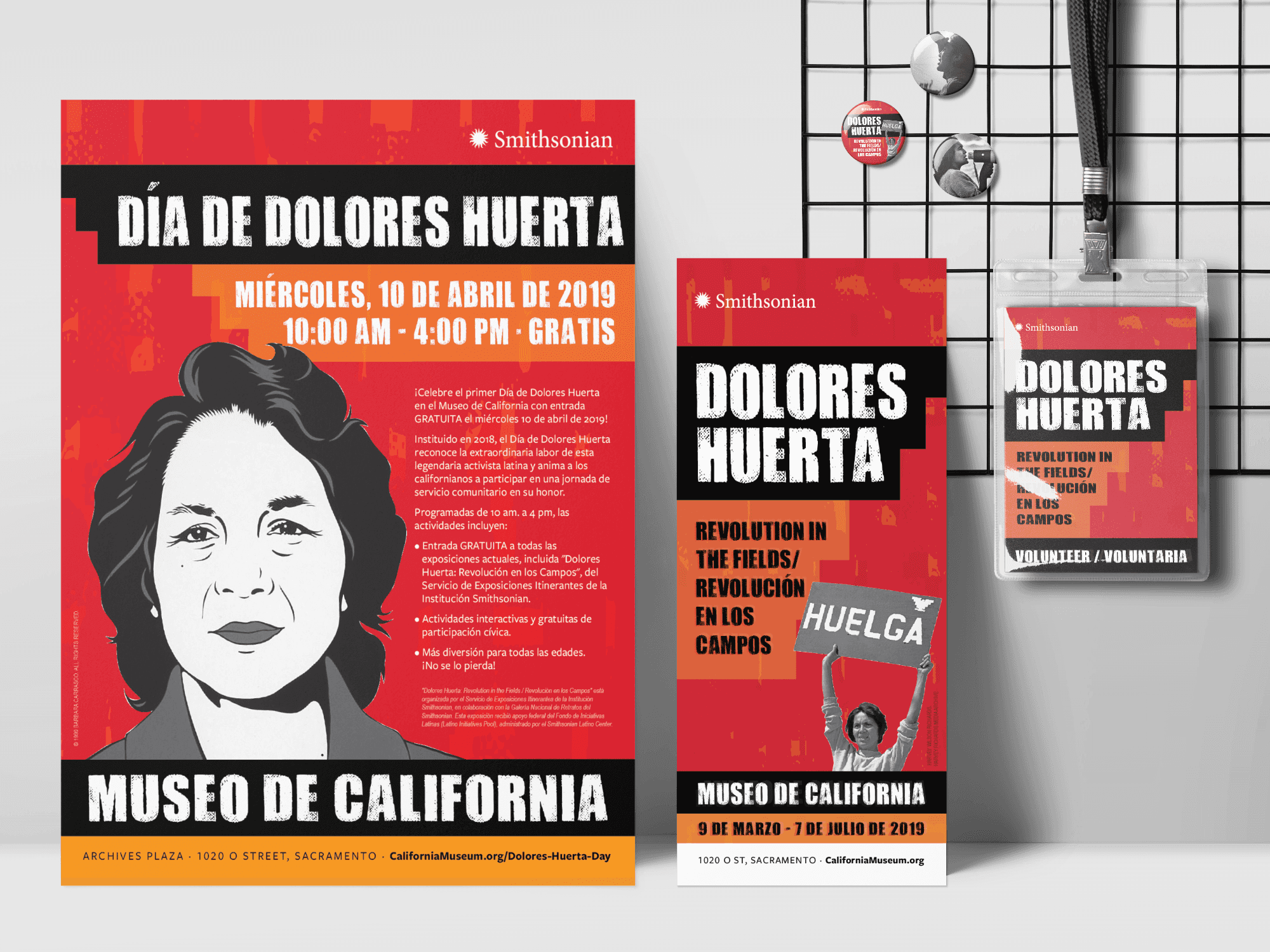
To capture a major regional market gap for inclusive civic programming, I architected a comprehensive bilingual brand system for the traveling exhibition "Dolores Huerta: Revolution in the Fields/Revolución en Los Campos" co-produced with the Smithsonian Institution.
By weaving the UFW’s iconic Huelga Eagle and historic Yale photography into the identity, the campaign successfully bridged the state's demographic realities with high-impact cultural storytelling, driving record-breaking community engagement and operational ROI.
The project serves as proof of concept for bilingual brand infrastructure, demonstrating its power as a strategic business imperative for California brands to achieve growth by leveraging the state's majority Latinx population, and for national brands to align with the U.S. shift to a non-white majority by 2045.
ROLE + SCOPE
Brand Strategy & Positioning: Concept, cultural relevancy strategy, positioning framework, and campaign architecture promoting the debut of a traveling exhibition co-produced with the Smithsonian Institution.
Creative Direction, Design, & Copywriting: Visual identity and bilingual narrative storytelling content system.
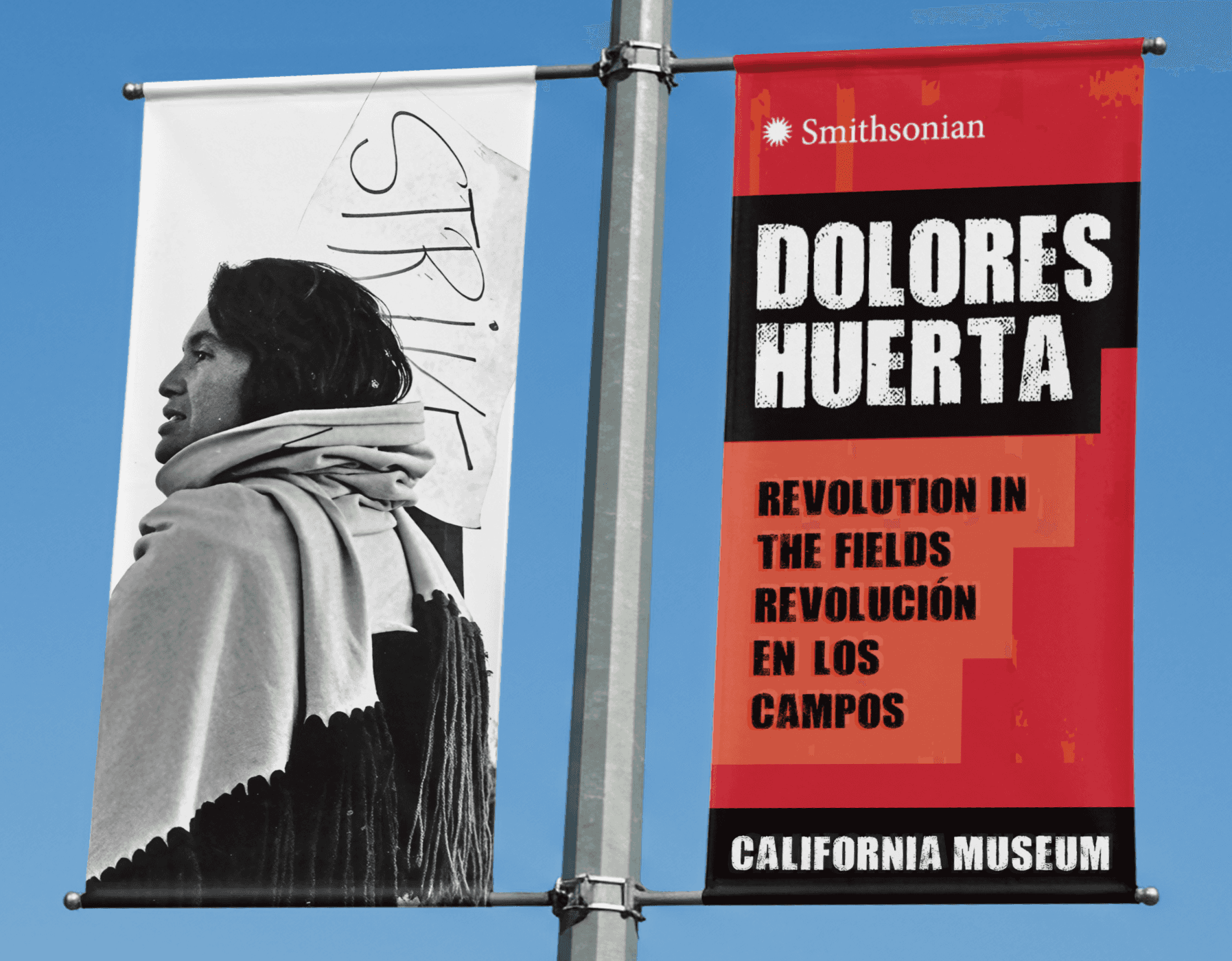
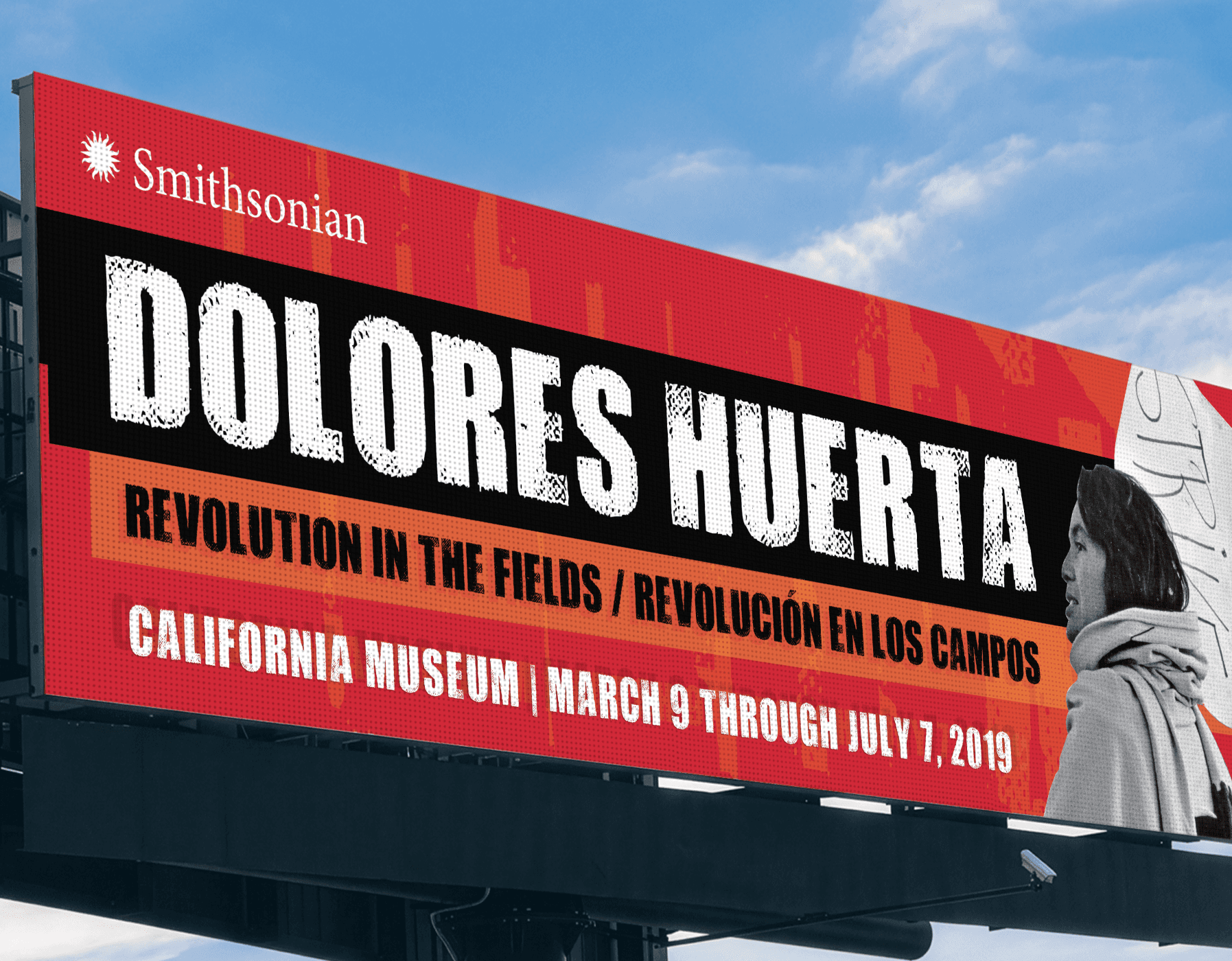
Integrated Marketing Systems: Omnichannel system executed across digital, print, radio, social, OOH, community outreach, and brand activation events.
IP Governance & Partner Management: Multi-agency stakeholder coordination across the Smithsonian Institution (SITES), Office of California Governor Gavin Newsom and First Partner Jennifer Siebel Newsom, Dolores Huerta Foundation, United Farm Workers (UFW), and regional immigration, Latinx, and activism community groups.
STRATEGY
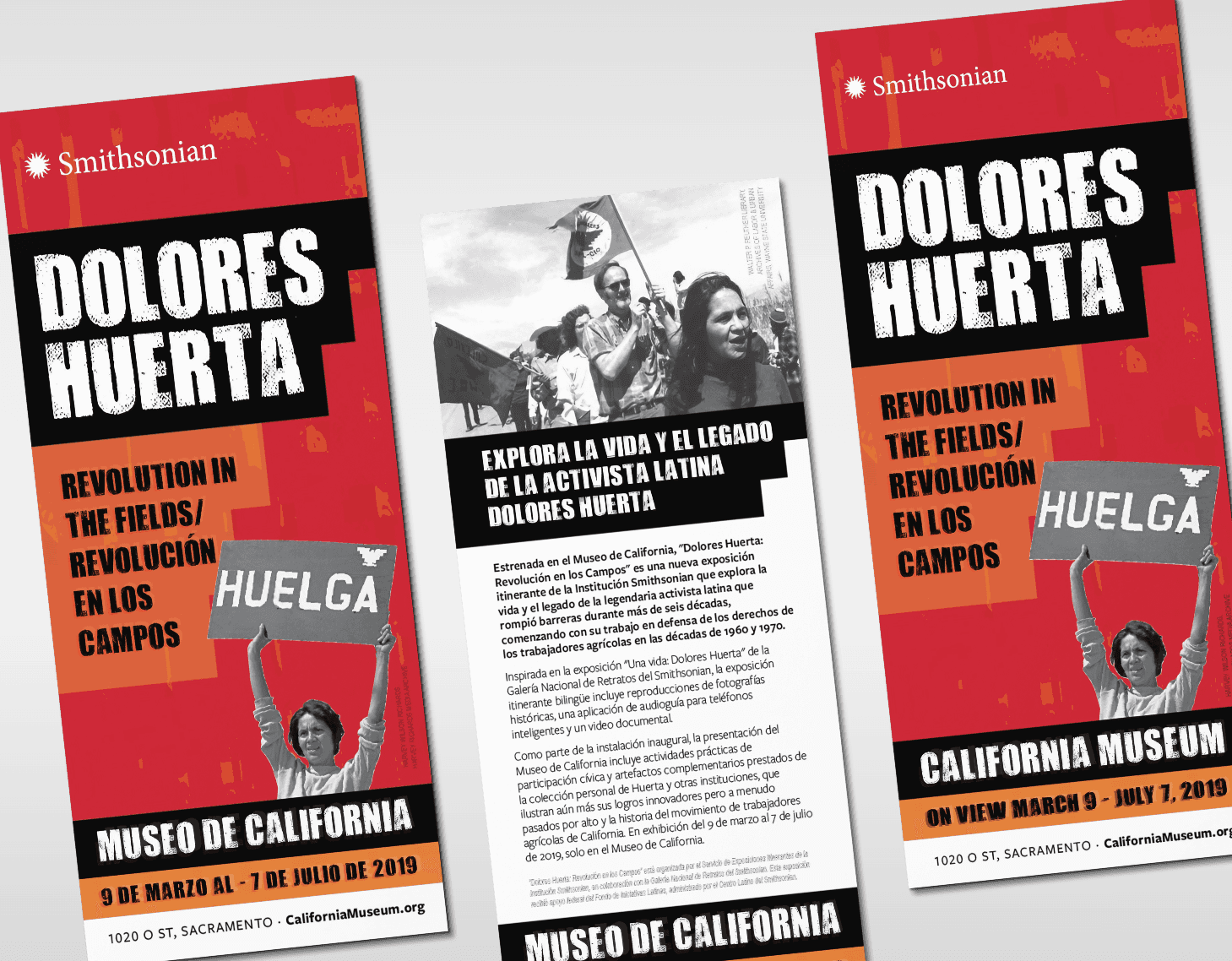
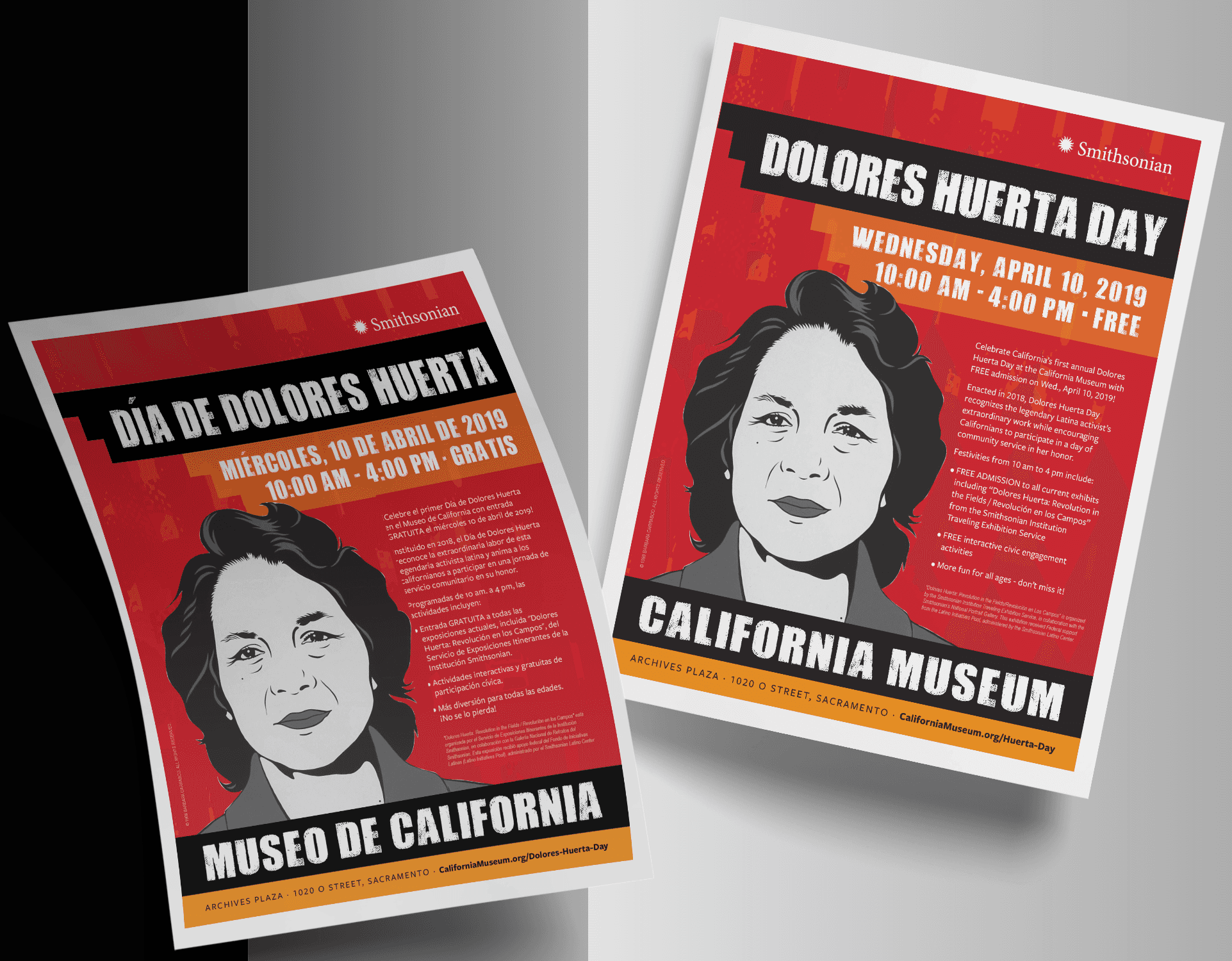
The strategy positioned the exhibition brand at the intersection of cultural relevancy, Latinx history, and civic rights to honor Dolores Huerta's monumental impact on both the state and the nation’s history and culture. Additionally, the brand system and all assets were created in both English and Spanish to widen reach and engagement with Latinx audiences.
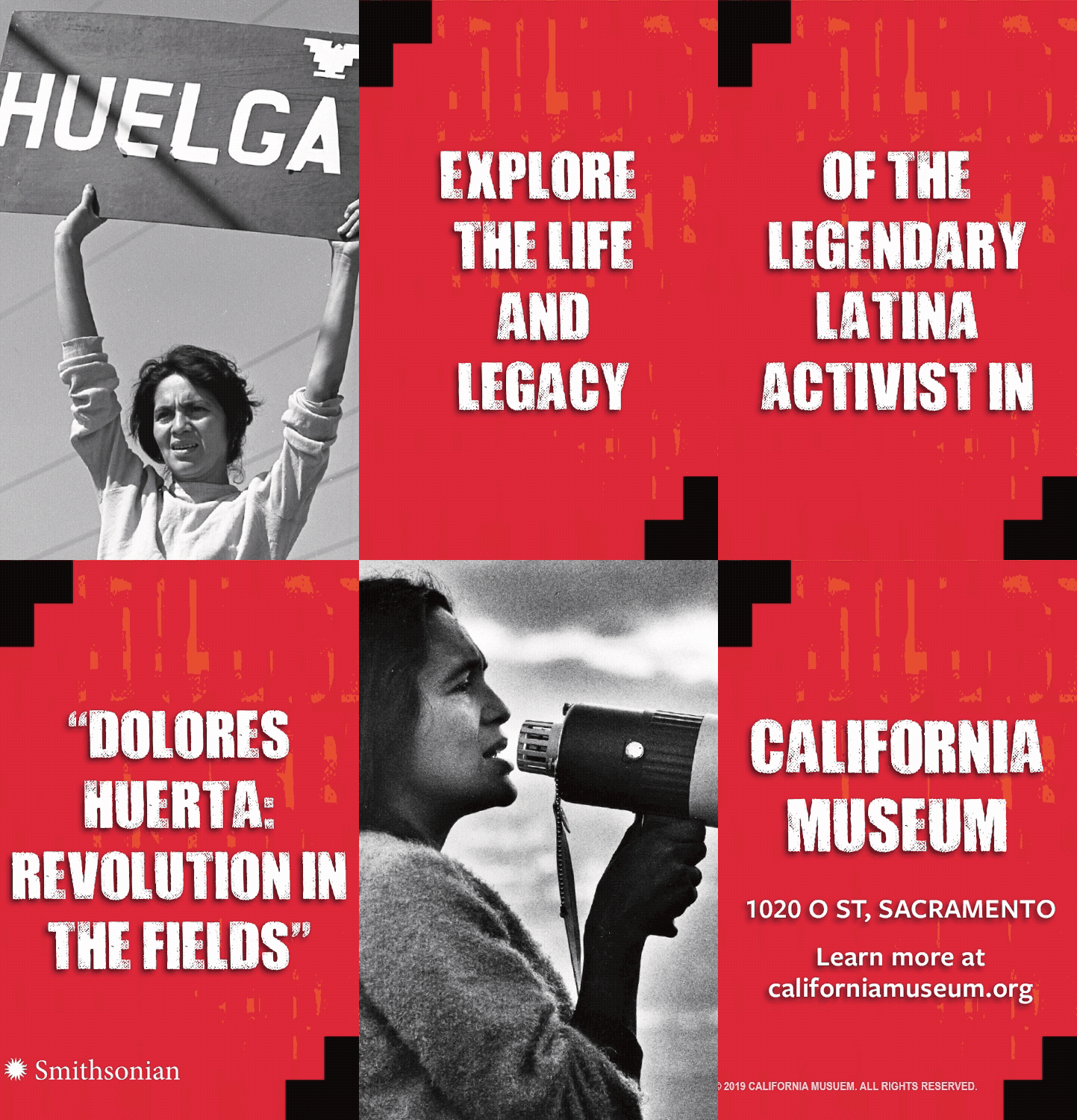
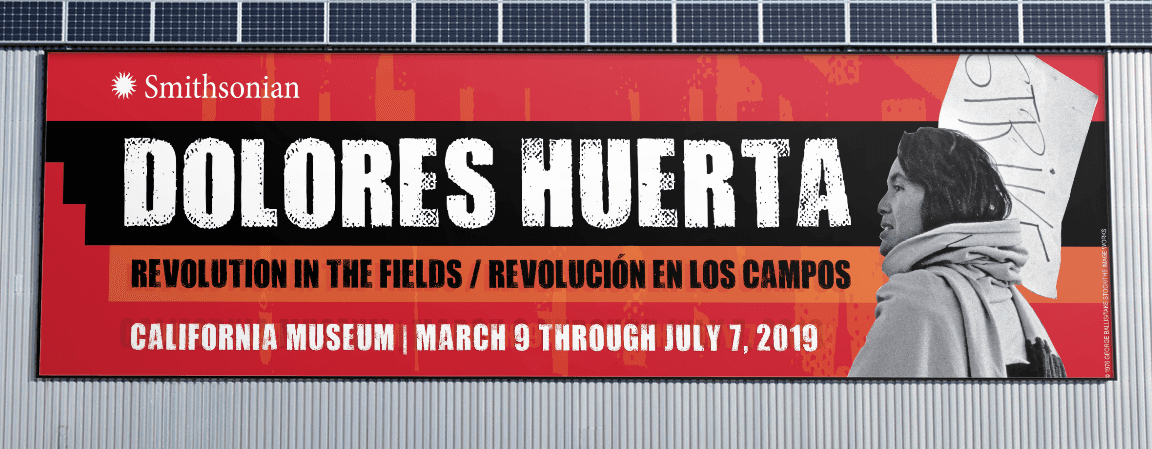
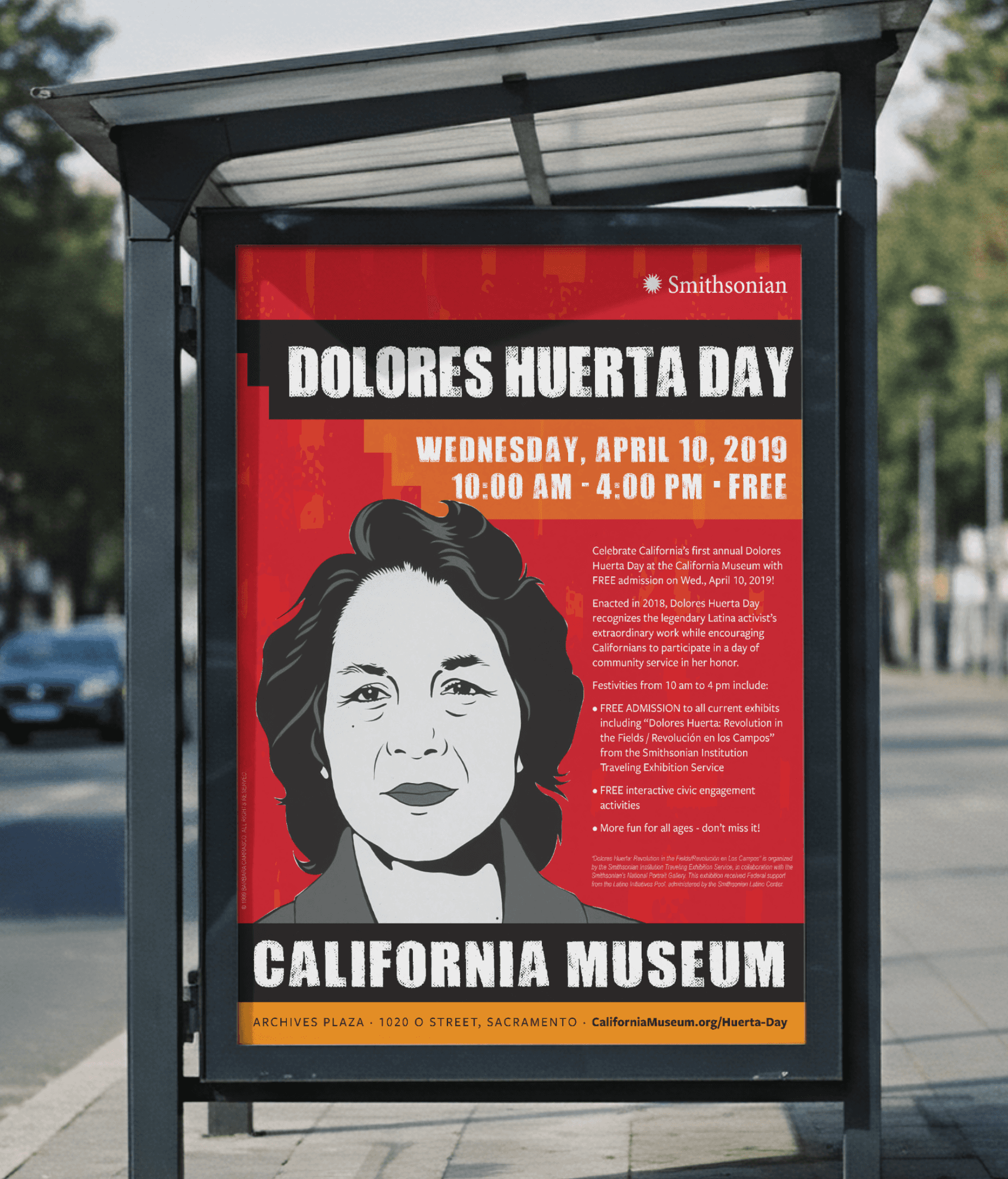
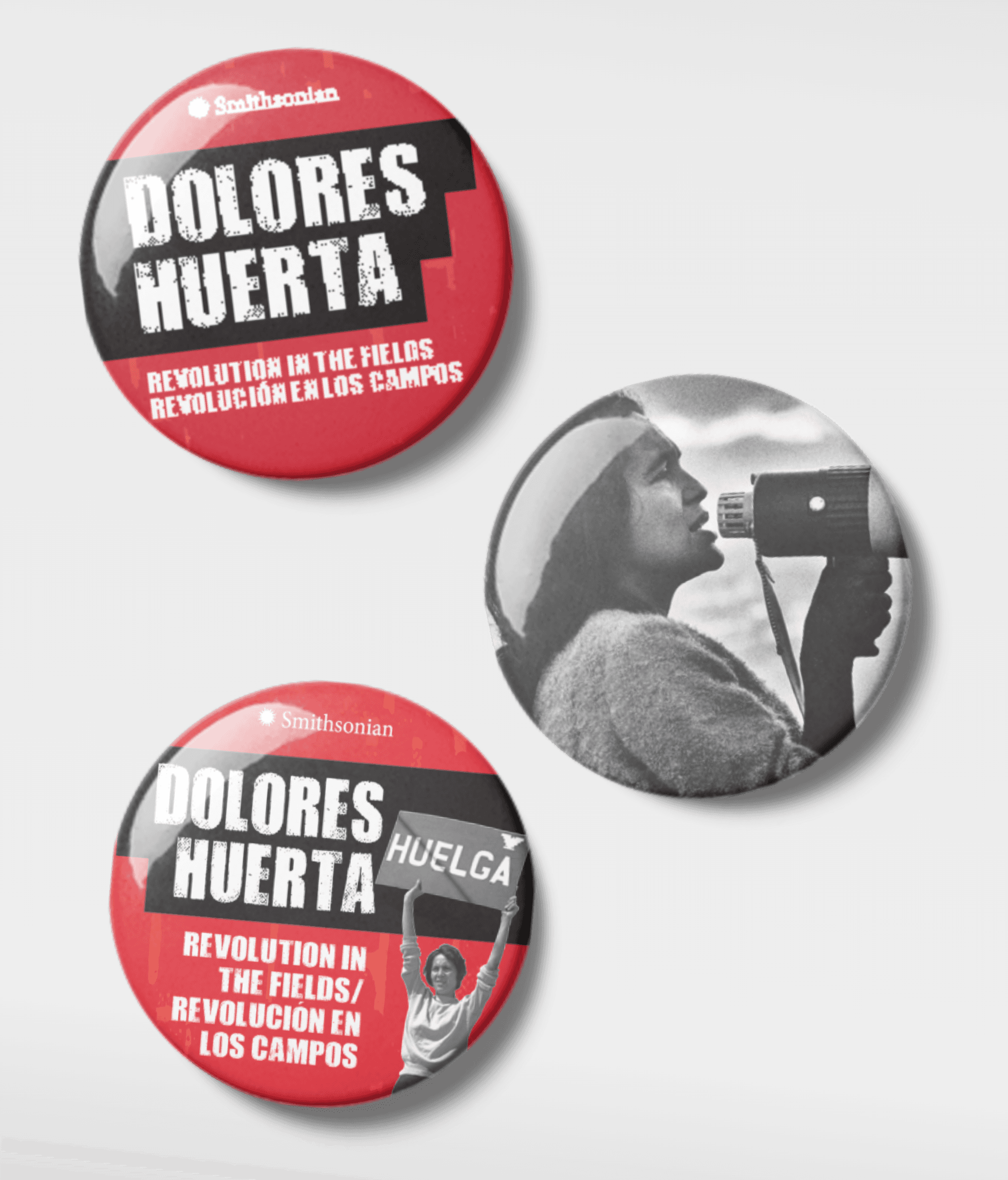
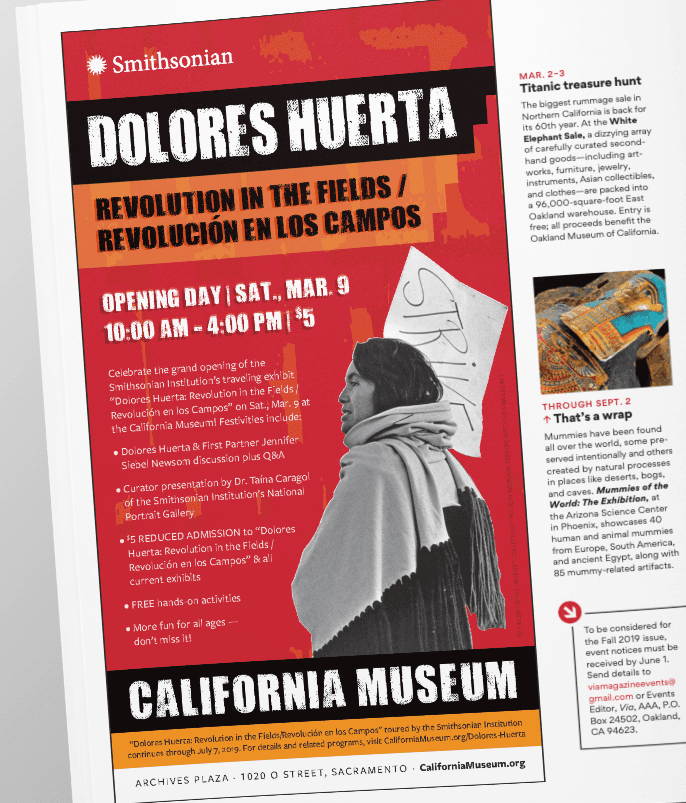
To authentically reflect the strategy and positioning, I designed the exhibition’s visual identity to incorporate elements of the UFW brand featuring the iconic Huelga Eagle, a stylized black bird emblem with angular, inverted wings like the lines of an Aztec pyramid.
Richard Chávez (1929-2011) designed the UFW brand system in 1962 to feature basic straight shapes that allowed protesting farmworkers to reproduce the symbols easily on their handmade flags and signs. The eagle communicates pride, history, and courage; the color black represents the dark, difficult battle for farmworkers’ rights; and the red signifies the blood sacrifice demanded of union members in standing up for their rights.
Visual elements were paired with historic photographs of the UFW taken by Jon Lewis on loan from the Beinecke Rare Book and Manuscript Library Repository at Yale, further illustrating Huerta’s leadership and prominence in the groundbreaking movement.
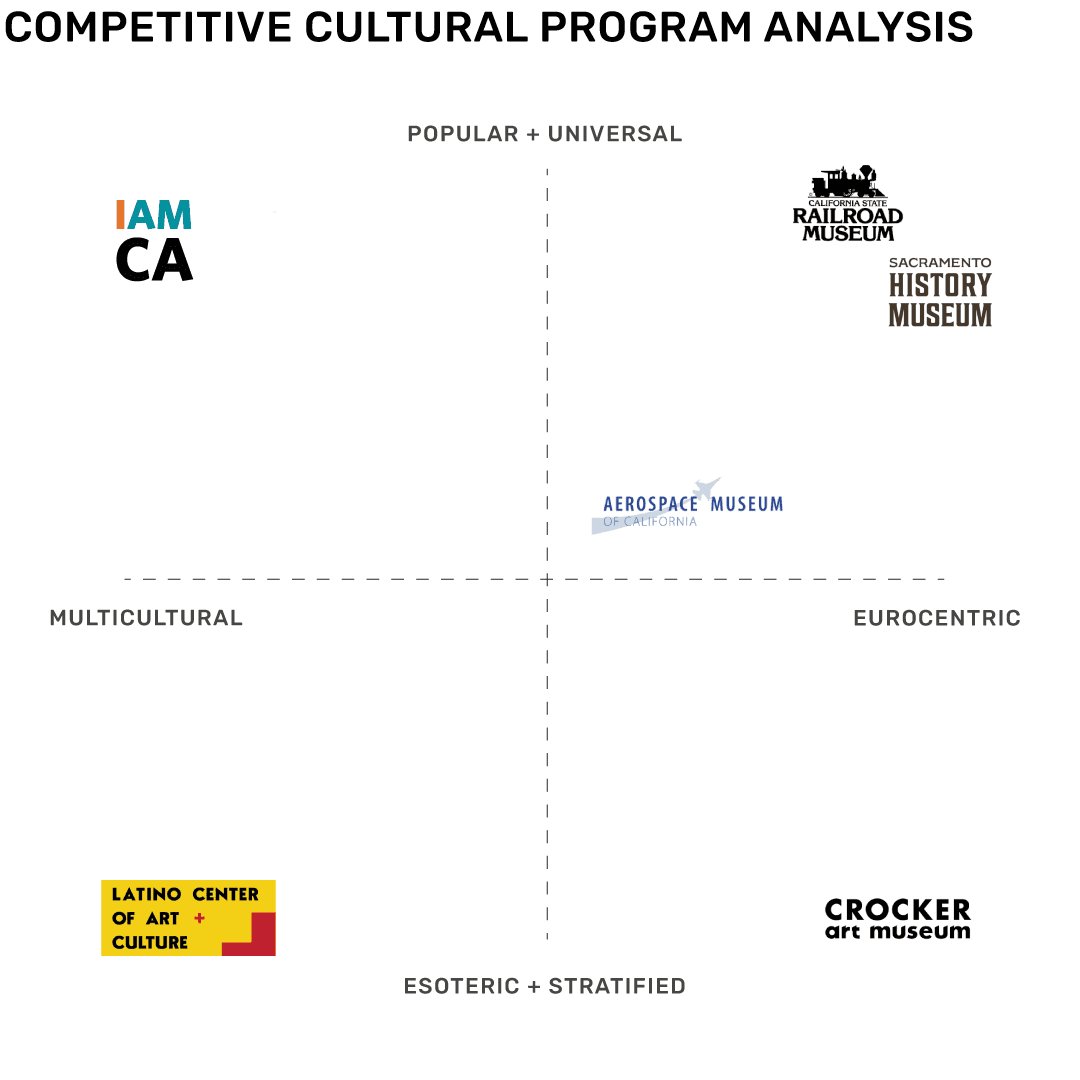
A competitive cultural program analysis revealed a major market gap: despite California’s population becoming predominantly Latinx in 2014, institutions in California’s state capital lacked accessible history, arts, and cultural programs for the Latinx audience on universal topics.
This created a competitive advantage for the California Museum's inaugural installation of the "Dolores Huerta" exhibition by presenting the opportunity to actively promote it to Latinx audiences in both English and Spanish.
To capture that market opportunity while honoring Huerta's prolific legacy, two core pillars served the exhibition brand development:
Cultural Relevancy & Inclusion: Aligning the institution with demographic realities by filling the regional void for inclusive civic programming.
Bilingual Brand Infrastructure: Dual English and Spanish execution of all brand assets, advertisements, and interpretive materials to authentically reach and engage the Latinx community.
SYSTEM
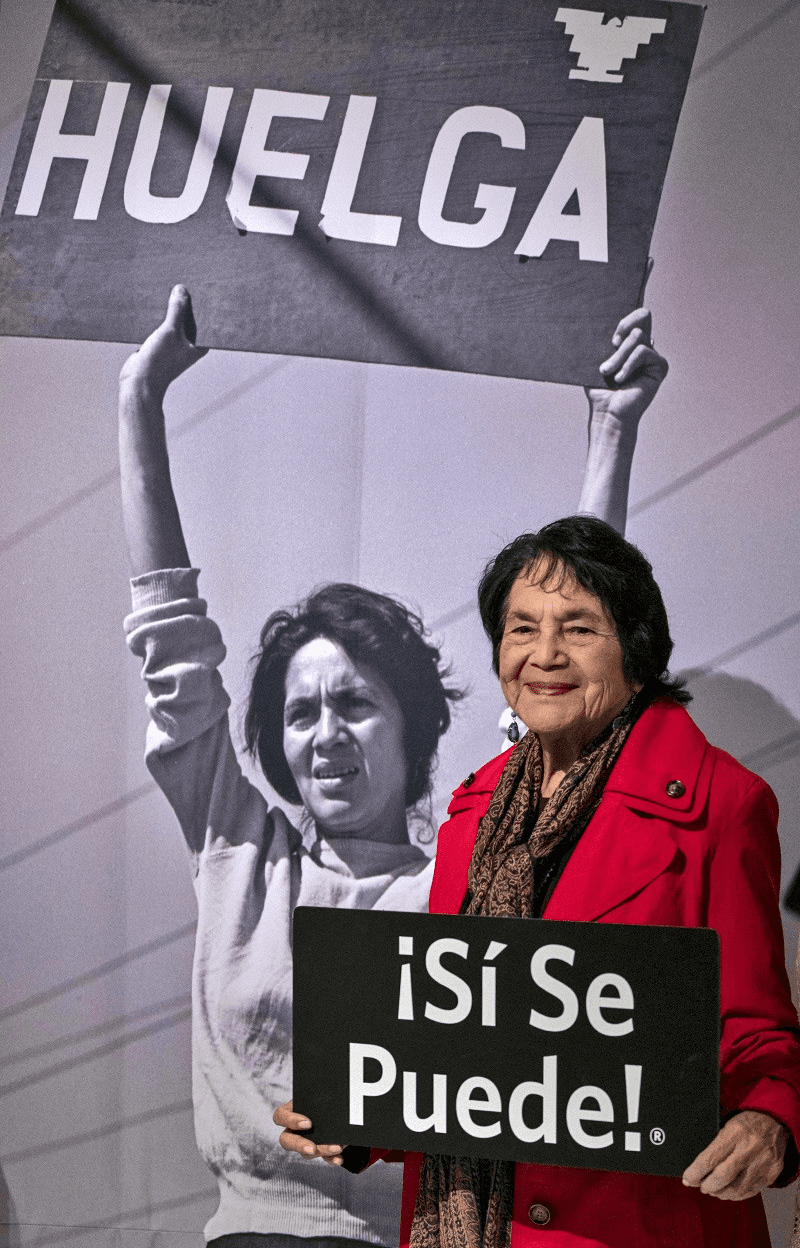
The brand system was applied to both the exhibition panels and across a robust omnichannel campaign. To anchor the exhibition launch, Dolores Huerta attended the opening event featuring a live Q&A with California First Partner Jennifer Siebel Newsom and participated in media coverage coordinated for the campaign.
Governance accompanied the system to maintain compliance with Yale’s usage terms for the historic photographs on loan while permitting robust cross-promotions with the Dolores Huerta Foundation, UFW Foundation, the Smithsonian, the Offices of Governor Gavin Newsom and First Partner Jennifer Siebel Newsom, and local immigrant support groups.
Collectively, the asset and governance systems were successful in elevating the institution's cultural footprint and Latinx engagement, while protecting Yale’s copyrighted images and alignment with all participating stakeholders. In addition, the Smithsonian elected to provide the brand system to future host venues as a key asset of the traveling exhibition.
RESULTS
2x
media coverage/
brand salience
+44%
field trip attendance/
institutional growth
+62%
Latinx engagement/
audience salience
+320%
capital efficiency/
ROI